Originally published in Silver Kris magazine, June 2005.
Surf, Sun, Sand, Ski
Out Of The Way Places For Fun In The Sun
by Will Kern
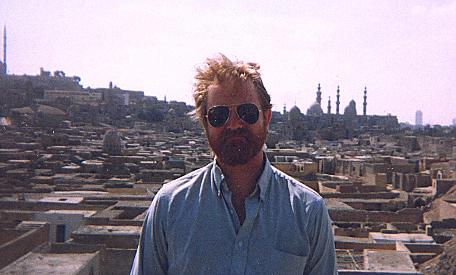
Joe Tourist in the City of the Dead, Cairo.
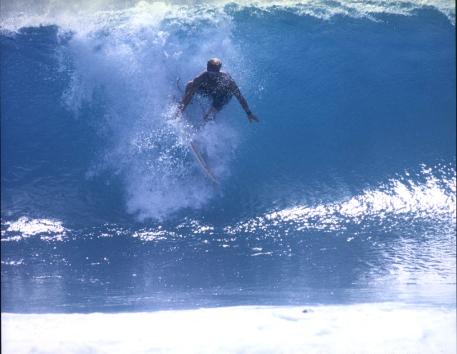
Oahu's North Shore.
VIP Terrace, Casa da Musica, Porto, Portugal.
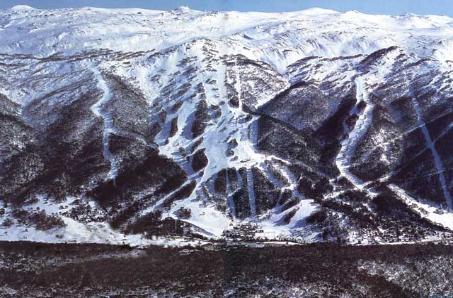
Thredbo Mountain, Australia.
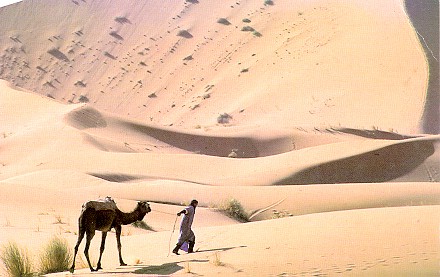
The Great Dunes of Merzouga, near the Algerian border.
When Joe Tourist dreams of a Hawaiian
vacation, does Oahu’s North Shore pop into
his thought balloon? Or when skiing, does
he consider Thredbo in Australia? Say
“sand” to him and he’ll probably think of
beaches, not dunes. And sunlight is not
something he would expect to find in a
Portuguese concert hall.
Well, maybe and maybe not. These days
Joe Tourist is constantly combing Mother
Earth’s well-trekked tresses for something
new, something a little off the beaten path.
Sun, Sand, Ski, and Surf are always a good
bet for Joe. But that doesn’t mean he has
to go to Waikiki. Or wants to.
How big is Joe these days? He’s a large
percentage of the planet, so it would seem.
When trying to get authentic tourist
numbers, the facts can be elusive. Paris,
France reportedly gets 60 million tourists
each year, which makes it the top
destination. But others claim the crown. A
company called Metropolitan Touring
maintains the Galapagos Islands gets 90
million tourists a year. This bests backwater
Paris by 30 million! Could this be true?
Why not? Paris. Rome. Galapagos Islands.
(Not surprisingly, Metropolitan just happens
to manage 20% of the islands’ tours).
So what are the real numbers?
Whatever they are, they’re a heck of a lot,
that’s for sure. According to the World
Travel and Tourism Council (WTTC), there
were more than 700 million tourists in 2002
and the numbers are rising.
700 million tourists! That’s a lot of Joes
(and Josephines). Not all of them jam the
hotspots like Paris and the Galapagos
Islands. Some head off to parts less-
known. In this spirit, we offer up these sort-
of out-of-the-way suggestions for Surf, Sun,
Sand, and Ski, for the Joe Tourist in all of
us.
Surf. Early Hawaiians had a name for it:
"he‘e nalu," which means "wave sliding."
Known as The Sport of Kings (Hawaii’s King
Kamehameha was an avid surfer), surfing’s
popularity took off at the turn of the last
century when rock-ribbed tubers would
head to Oahu’s rugged North Shore to
catch a wave and sit on top of the world.
The North Shore’s waves are big. They
swell out of the ocean in some kind of eco-
competition to touch the sky. In winter,
some of these monsters can get as high as
7 m, with faces up to 16 m. Conditions can
be dangerous, even for the seasoned pro.
In yesteryear, hearty Hawaiians would risk
their tanned necks by taming wild waves on
surfboards hewn from redwood and balsa.
These days they stand on sterner stuff,
surfboards made of fiberglass, so it’s a lot
safer. The North Shore also has kindler,
gentler times, and for those with limited or
no skill, it has two good spots to take
lessons. Chuns Reef and Puenta Point are
known for their mild, tapering walls and
rolling swells, about half the size of whatever’
s happening at the North Shore’s main
beach. There are several schools here that
charge around $65 for a two-hour lesson.
And for those who want overrated and
crowded, there’s always Waikiki on the
south side of the island.
Sunlight. That’s what different about the
Casa da Musica, this world class concert
hall in Porto, Portugal. The sun comes
streaming in, pouring in through two
opposite walls made entirely of glass. It
shines in from behind the podium where the
orchestra plays and beams down from the
wall behind the audience. This is the only
concert hall in the world built this way, and
for good reason. Most architects would
avoid a glass concert hall like a warped T-
square because it can bounce sound at
random, causing terrible acoustics. Not to
mention glass is a flimsy barrier between
the inside music and the outside traffic jam.
But maverick Dutch architect Rem
Koolhaas, who blueprinted Casa da Musica,
had a plan. He designed the glass so that it
would ripple in tightly curved folds, setting
two glass skins a meter apart to keep things
quiet. To keep the outside horn honkings
from the inside horn honkings, so to speak.
Costing euro $100 million, it includes a
1,238-seat performance hall, rehearsal
space, and recording studios for the Porto
National Orchestra. Koolhaas’s cool house
opened on April 15 of this year, giving this
little working class city one of the best music
venues ever built. Now that’s sunny, indeed.
Ski Australia? For some, putting these two
words together conjures up the image of a
beer soaked party animal being dragged
behind a speedboat while chucking a
freshly emptied Victoria Bitter in the wake.
But Australia is not just water sports, it has
snow skiing too, and Thredbo is one of its
most popular resorts. Back in 1955, a
Czechoslovakian immigrant and former ski
instructor named Tony Sponar had a
vision. He saw the snow-capped peaks in
this sleepy little cow country as eminently
ski-able, and he lead the forward charge
that eventually changed everything. Gone
is the plethora of moos, replaced by the
moolah of tourist dollars. And they come
from all over the globe to strap on their
Rossingals and barrel down these pristine
slopes. Thredbo brags of the longest
vertical trail in Australia (672 m), with the
longest run being 5.5 km, and its highest
peak, Cabramurra, is 1930 m above sea
level. The snow starts to thin out at 1500
m, but the resort has 380 snowmaking guns
that can cover as much as 60 hectares.
Thredbo village itself is only a few minutes
walking distance from the slopes and has a
solid European atmosphere with plenty of
accommodation and nightlife.
Sand. Yes, Morocco is in the Sahara
Desert, but the desert attractions are far
from the cities. So after fawning over Fez
and marveling at Marrakech, book at trek to
Erfoud, the gateway to Other Worldly. A
three-day excursion from Marrakech winds
through mountains passes, valley trails,
gorgeous gorges, and green oases, and
ends up at The End Of The World – or at
least the outskirts. Once in little Erfoud
(population 24,000), take an overnight
camel to the Great Dunes of Merzouga,
near the Algerian border. This place is
primal. It is hard to imagine these huge
orange dunes looked any different fifty
million years ago. Or will fifty million years
from now. After rolling around in the sand,
get back on the camel and head to Rissani.
It’s got an excellent casbah (castle) and a
hustling bustling market on Tuesday,
Thursday and Sunday. Near Rissani is the
medieval town of Sijilmassa with its superb
Roman ruins and the Grand Mosque. This
region is also the capital of the date
industry, and Erfoud is the home to over
one million date palms. Not surprisingly, it is
the hub of the action around Morocco’s
Date Festival, which happens after the
October harvest. Plan accordingly and
catch the fashion parade down the streets
of Erfoud and the crowning of “Miss Date.”